Our Roadmap
The steps below outline our long-range plan for creating a network of land-based communities here in the UK—and how you can be part of that journey.
Step 1
Share the vision
At the heart of our project is a holistic vision for one-planet community living—shaped by years of hands-on practice, visits to eco-villages, and research into one-planet solutions. In a world ravaged by multiple intersecting crises, that vision is, we believe, a breath of fresh air and a potential source of strength and inspiration for all those looking for genuine alternatives. By sharing the vision as clearly and powerfully as we can, we hope to offer something our community can connect with, be inspired by, and get behind to help bring to life.
Step 2
Grow our organisation
Creating even one land‑based community will take serious project management; establishing a whole network of communities is going to need a strong team and a robust organisation to co-ordinate all the moving parts involved. So that’s what we mean to create. At the moment we’re a little green shoot, but we aim to grow into a strong oak tree that can support the emergence of a whole flourishing ecosystem. Our current focus is on bringing people on board to help nurture this growth, and working on ways to finance our organisation long-term.
Help to share the vision
Our aim is to articulate a clear, compelling, and hope-filled picture of what one‑planet community living could look like and how we can get there—a story that people from all walks of life can feel and rally behind.
Using a variety of media and platforms, we’ll share our vision through stories, reports, visuals, and experiences that make the pathway home to the land feel tangible, appealing and feasible.
Our aim is to offer a deeply “thrutopian” framing to our vision: acknowledging the many constraints while charting elegant, grounded paths forward.
What this looks like
- This website is our first big step towards articulating our vision. Our Vision page details our core community design, while our Mission page gives context to what we're trying to achieve.
- Our blog, 'Collective Insights', will contain writings on a wide range of core topics relating to land-based community living.
- These writings will also be posted on our paywall-free Medium channel and our free Substack.
- We'll be active on social media.
- We'll seek out speaking opportunities at festivals, conferences, and community gatherings where our message can resonate with those already interested in regenerative living and ecological alternatives.
- And we’ll be open to PR opportunities that allow us to reach broader audiences and amplify our message through mainstream and alternative media outlets.
Ways to get involved
- Read our Vision and Mission pages and share your feedback
- Join the Community Design working group in our online hub
- Join our Media team (we’re looking for artists, storytellers, social media and PR people to help us craft and share compelling narratives around our vision)
- Subscribe to our Collective Insights blog and our Medium and Substack channels, and share content with others who might resonate
- Write for us
- Help us connect with aligned media channels, festivals, or speaking opportunities.
- Amplify our message and content through your networks and social channels.
Help us grow the organisation
To support the creation of a network of land-based communities, we need a robust organisation that's rooted in values, clear in structure, and capable of holding complexity without becoming heavy or hierarchical.
Our task at this stage is to evolve from a small, enthusiastic start-up into a strong enabling vehicle: a CIC with solid governance, transparent finances, healthy culture, and the right mix of volunteer energy and professional capacity.
This foundation will allow us to support regional groups to focus on place-based action towards community creation, providing resources, guidance, finances, legal and technical support, while also building the wider ecosystem of partners and allies.
What this looks like
- Sociocratic structure: Creating circles with consent-based decisions, clear domains, defined roles, and regular retrospectives.
- Core functions: Establishing key areas—Community Support, Finance & Legal, Partnerships, Communications, Enterprise, Events, and Inclusivity—to hold essential organisational work.
- Onboarding & playbooks: Developing lightweight guides, pathways, and agreements so new contributors can join easily and align with our culture.
- Financial resilience: Building transparent accounts, simple budgeting processes, and long-term revenue pathways to stabilise the CIC.
- Skilled contributors: Recruiting directors, advisors, and volunteers with expertise in planning, natural building, agroecology, community development, comms, governance, and fundraising.
- Cultural health: Maintaining a rhythm of online circles and in-person gatherings that build trust, connection, and collective intelligence.
Ways to get involved
- Join a working group in the online hub
- Offer specialist skills—short sprints or ongoing contributions
- Support recruitment, onboarding, or coordination of volunteers
- Provide pro bono legal, planning, design, or fundraising expertise
- Become an advisor or mentor in your professional field
- Contribute donations or impact investment to grow our organisational capacity
- Share contacts, opportunities, or insights that could strengthen our CIC
Step 1
Share the vision
At the heart of our project is a holistic vision for one-planet community living—shaped by years of hands-on practice, visits to eco-villages, and research into one-planet solutions. In a world ravaged by multiple intersecting crises, that vision is, we believe, a breath of fresh air and a potential source of strength and inspiration for all those looking for genuine alternatives. By sharing the vision as clearly and powerfully as we can, we hope to offer something our community can connect with, be inspired by, and get behind to help bring to life.
Help to share the vision
Our aim is to articulate a clear, compelling, and hope-filled picture of what one‑planet community living could look like and how we can get there—a story that people from all walks of life can feel and rally behind.
Using a variety of media and platforms, we’ll share our vision through stories, reports, visuals, and experiences that make the pathway home to the land feel tangible, appealing and feasible.
Our aim is to offer a deeply “thrutopian” framing to our vision: acknowledging the many constraints while charting elegant, grounded paths forward.
What this looks like
- This website is our first big step towards articulating our vision. Our Vision page details our core community design, while our Mission page gives context to what we're trying to achieve.
- Our blog, 'Collective Insights', will contain writings on a wide range of core topics relating to land-based community living.
- These writings will also be posted on our paywall-free Medium channel and our free Substack.
- We'll be active on social media.
- We'll seek out speaking opportunities at festivals, conferences, and community gatherings where our message can resonate with those already interested in regenerative living and ecological alternatives.
- And we’ll be open to PR opportunities that allow us to reach broader audiences and amplify our message through mainstream and alternative media outlets.
Ways to get involved
- Read our Vision and Mission pages and share your feedback
- Join the Community Design working group in our online hub
- Join our Media team (we’re looking for artists, storytellers, social media and PR people to help us craft and share compelling narratives around our vision)
- Subscribe to our Collective Insights blog and our Medium and Substack channels, and share content with others who might resonate
- Write for us
- Help us connect with aligned media channels, festivals, or speaking opportunities.
- Amplify our message and content through your networks and social channels.
Step 2
Grow our organisation
Creating even one land‑based community will take serious project management; establishing a whole network of communities is going to need a strong team and a robust organisation to co-ordinate all the moving parts involved. So that’s what we mean to create. At the moment we’re a little green shoot, but we aim to grow into a strong oak tree that can support the emergence of a whole flourishing ecosystem. Our current focus is on bringing people on board to help nurture this growth, and working on ways to finance our organisation long-term.
Help us grow the organisation
To support the creation of a network of land-based communities, we need a robust organisation that's rooted in values, clear in structure, and capable of holding complexity without becoming heavy or hierarchical.
Our task at this stage is to evolve from a small, enthusiastic start-up into a strong enabling vehicle: a CIC with solid governance, transparent finances, healthy culture, and the right mix of volunteer energy and professional capacity.
This foundation will allow us to support regional groups to focus on place-based action towards community creation, providing resources, guidance, finances, legal and technical support, while also building the wider ecosystem of partners and allies.
What this looks like
- Sociocratic structure: Creating circles with consent-based decisions, clear domains, defined roles, and regular retrospectives.
- Core functions: Establishing key areas—Community Support, Finance & Legal, Partnerships, Communications, Enterprise, Events, and Inclusivity—to hold essential organisational work.
- Onboarding & playbooks: Developing lightweight guides, pathways, and agreements so new contributors can join easily and align with our culture.
- Financial resilience: Building transparent accounts, simple budgeting processes, and long-term revenue pathways to stabilise the CIC.
- Skilled contributors: Recruiting directors, advisors, and volunteers with expertise in planning, natural building, agroecology, community development, comms, governance, and fundraising.
- Cultural health: Maintaining a rhythm of online circles and in-person gatherings that build trust, connection, and collective intelligence.
Ways to get involved
- Join a working group in the online hub
- Offer specialist skills—short sprints or ongoing contributions
- Support recruitment, onboarding, or coordination of volunteers
- Provide pro bono legal, planning, design, or fundraising expertise
- Become an advisor or mentor in your professional field
- Contribute donations or impact investment to grow our organisational capacity
- Share contacts, opportunities, or insights that could strengthen our CIC
Step 3
Build a financial engine
As an organisation we need operating funds. Instead of relying solely on grant funding or trying to move forward on a shoestring budget, we’re working to create a strong and sustainable financial engine to power our mission. To this end, we're developing a range of enterprises that will generate revenue while also serving a variety of core goals: demonstrating key aspects of our community vision; growing our collaborative ecosystem; expanding the skills-base of our collective; and nourishing the broader land-based living movement in the UK.
Step 4
Weave a collaborative ecosystem
Our long-term success will depend on our cultivating a broad web of partnerships and collaborative relationships. We’ll be actively seeking to build connections with like-minded organisations, technical experts, progressive landowners, sympathetic funders, and forward-thinking local authorities. This collaborative ecosystem will establish us within the broader regenerative living movement and provide expertise, credibility, and support as we work to forge a pathway back home to the land and into one-planet community.
Enterprises in the pipeline
We currently have 4 enterprises in the pipeline:
1. WyldRooms
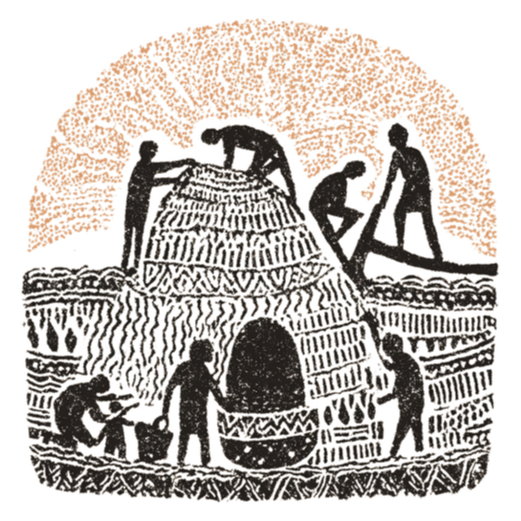
High-end, nature-inspired, circular straw-bale garden rooms.
In addition to generating revenue, WyldRooms will model the kind of structures we’ll be creating in our communities, provide livelihoods for a team of natural builders, skill-up volunteer team members, and showcase low-impact natural building to an audience who might not otherwise be exposed to them—all while creating beautiful living spaces for clients.
We’re just putting the finishing touches to our prototype WyldRoom and will soon be ready to launch and start taking orders for Spring 2026 onwards.
Ways to get involved:
- Join the WyldRooms working group in the online hub
- Apply to join our WyldRoom build crew as a paid natural builder, or volunteer and learn natural building skills
- Commission a WyldRoom for your garden
- Introduce skilled craftspeople or natural builders who may want to collaborate
- Offer workshop space, tools, or materials to support builds (main raw materials needed include small straw bales, roundwood sweet chestnut poles, hazel poles, sawn timber, clay)
2. Retreat Centres
Immersive, nature connection ‘eco-tourism’ sites featuring WyldRoom sleeping pods set in a regenerative landscape of food forests, permaculture gardens, rewilding areas, natural swimming ponds, with a range of beautiful low-impact infrastructure to support individual stays as well as group workshops and events.
As well as generating revenue and serving as training hubs for our collective, these sites will be small-scale versions of the kind of communities we aim to create, built along exactly the same design lines, and so can act as demonstration sites showing planners, funders, and potential residents what our full-size communities will look and feel like.
We’re aiming to build our first retreat centre in summer 2026 and are currently looking for potential sites around South Devon as well as investors to fund construction.
Ways to get involved:
- Join the Retreat Centres working group in the online hub
- Get in touch if you have land in South Devon and would like to partner with us to create our first retreat centre
- Connect us with landowners who might want to partner with us
- Get in touch if you’d like to consider investing to fund retreat centre construction
- Join our volunteer network to be part of building our first retreat centre
- Offer planning expertise
3. Events & Courses
In-person and online events, courses and workshops covering a wide range of practical skills, social-weaving techniques, and nature-based practices—from natural building to permaculture design, sociocracy to the way of council, nature connection to ecological wisdom and regenerative living philosophies.
These learning experiences will generate revenue while building the competencies needed for land-based community living among our tribe and sharing valuable skills into the broader regenerative living movement.
We’ll be running online events from winter 2025/26 and in-person events from spring 2026.
Ways to get involved:
- Join the Events & Courses working group in the online hub
- Talk to us about co-creating an event with us, either online or in-person
- Collaborate on course development if you have expertise to share
- Offer venues, land, or indoor spaces for workshops
- Volunteer to support event logistics, filming, or facilitation
- Suggest teachers, practitioners, or traditions that align with our ethos
4. Land-Based Crafts Store
A carefully curated online marketplace for high-quality land-based products made using traditional skills and sustainable materials. This will showcase the best of British craft while providing an outlet for artisans within and beyond our planned communities.
Launching 2026.
Ways to get involved:
- Join the Crafts Store working group in the online hub
- Partner with us as a craftsperson to sell your work
- Suggest craftspeople or products that align with our values
- Offer help with photography, storytelling, or product sourcing
- Introduce us to craft guilds, makerspaces, or heritage skills organisations
Supporting the enterprise ecosystem
If you’d like to be involved in developing our enterprise arm as a whole—through mentoring, investment, contacts, or operational support—we’d love to hear from you.
Get in touch
Help us weave the ecosystem
We're seeking to build relationships with:
- natural builders, craftspeople, and heritage-skills artisans
- agroecologists, rewilding practitioners, and ecological designers
- permaculture designers and landscape architects
- regenerative culture practitioners, wellbeing and nature-connection facilitators
- community development practitioners and co-op governance specialists
- landowners, progressive estates, and trusts
- planners and policy allies
- local authority champions and policy innovators
- ethical lenders, impact investors, and social entrepreneurs
- renewable energy and off-grid engineers
- educators, researchers, and academic partners
- systems thinkers, ecological economists
- movement organisations and other aligned networks
If you have expertise of connections in any of these areas—or know people who do—please get in touch.
Step 3
Build a financial engine
As an organisation we need operating funds. Instead of relying solely on grant funding or trying to move forward on a shoestring budget, we’re working to create a strong and sustainable financial engine to power our mission. To this end, we're developing a range of enterprises that will generate revenue while also serving a variety of core goals: demonstrating key aspects of our community vision; growing our collaborative ecosystem; expanding the skills-base of our collective; and nourishing the broader land-based living movement in the UK.
Enterprises in the pipeline
We currently have 4 enterprises in the pipeline:
1. WyldRooms
High-end, nature-inspired, circular straw-bale garden rooms.
In addition to generating revenue, WyldRooms will model the kind of structures we’ll be creating in our communities, provide livelihoods for a team of natural builders, skill-up volunteer team members, and showcase low-impact natural building to an audience who might not otherwise be exposed to them—all while creating beautiful living spaces for clients.
We’re just putting the finishing touches to our prototype WyldRoom and will soon be ready to launch and start taking orders for Spring 2026 onwards.
Ways to get involved:
- Join the WyldRooms working group in the online hub
- Apply to join our WyldRoom build crew as a paid natural builder, or volunteer and learn natural building skills
- Commission a WyldRoom for your garden
- Introduce skilled craftspeople or natural builders who may want to collaborate
- Offer workshop space, tools, or materials to support builds (main raw materials needed include small straw bales, roundwood sweet chestnut poles, hazel poles, sawn timber, clay)
2. Retreat Centres
Immersive, nature connection ‘eco-tourism’ sites featuring WyldRoom sleeping pods set in a regenerative landscape of food forests, permaculture gardens, rewilding areas, natural swimming ponds, with a range of beautiful low-impact infrastructure to support individual stays as well as group workshops and events.
As well as generating revenue and serving as training hubs for our collective, these sites will be small-scale versions of the kind of communities we aim to create, built along exactly the same design lines, and so can act as demonstration sites showing planners, funders, and potential residents what our full-size communities will look and feel like.
We’re aiming to build our first retreat centre in summer 2026 and are currently looking for potential sites around South Devon as well as investors to fund construction.
Ways to get involved:
- Join the Retreat Centres working group in the online hub
- Get in touch if you have land in South Devon and would like to partner with us to create our first retreat centre
- Connect us with landowners who might want to partner with us
- Get in touch if you’d like to consider investing to fund retreat centre construction
- Join our volunteer network to be part of building our first retreat centre
- Offer planning expertise
3. Events & Courses
In-person and online events, courses and workshops covering a wide range of practical skills, social-weaving techniques, and nature-based practices—from natural building to permaculture design, sociocracy to the way of council, nature connection to ecological wisdom and regenerative living philosophies.
These learning experiences will generate revenue while building the competencies needed for land-based community living among our tribe and sharing valuable skills into the broader regenerative living movement.
We’ll be running online events from winter 2025/26 and in-person events from spring 2026.
Ways to get involved:
- Join the Events & Courses working group in the online hub
- Talk to us about co-creating an event with us, either online or in-person
- Collaborate on course development if you have expertise to share
- Offer venues, land, or indoor spaces for workshops
- Volunteer to support event logistics, filming, or facilitation
- Suggest teachers, practitioners, or traditions that align with our ethos
4. Land-Based Crafts Store
A carefully curated online marketplace for high-quality land-based products made using traditional skills and sustainable materials. This will showcase the best of British craft while providing an outlet for artisans within and beyond our planned communities.
Launching 2026.
Ways to get involved:
- Join the Crafts Store working group in the online hub
- Partner with us as a craftsperson to sell your work
- Suggest craftspeople or products that align with our values
- Offer help with photography, storytelling, or product sourcing
- Introduce us to craft guilds, makerspaces, or heritage skills organisations
Supporting the enterprise ecosystem
If you’d like to be involved in developing our enterprise arm as a whole—through mentoring, investment, contacts, or operational support—we’d love to hear from you.
Get in touch
Step 4
Weave a collaborative ecosystem
Our long-term success will depend on our cultivating a broad web of partnerships and collaborative relationships. We’ll be actively seeking to build connections with like-minded organisations, technical experts, progressive landowners, sympathetic funders, and forward-thinking local authorities. This collaborative ecosystem will establish us within the broader regenerative living movement and provide expertise, credibility, and support as we work to forge a pathway back home to the land and into one-planet community.
Help us weave the ecosystem
We're seeking to build relationships with:
- natural builders, craftspeople, and heritage-skills artisans
- agroecologists, rewilding practitioners, and ecological designers
- permaculture designers and landscape architects
- regenerative culture practitioners, wellbeing and nature-connection facilitators
- community development practitioners and co-op governance specialists
- landowners, progressive estates, and trusts
- planners and policy allies
- local authority champions and policy innovators
- ethical lenders, impact investors, and social entrepreneurs
- renewable energy and off-grid engineers
- educators, researchers, and academic partners
- systems thinkers, ecological economists
- movement organisations and other aligned networks
If you have expertise of connections in any of these areas—or know people who do—please get in touch.
Step 5
Create some impact
There's a lot we can be doing to nurture the land-based living movement ahead of building communities: supporting other projects, running workshops, and hosting events. We also have some ideas for creative stunts that would be a lot of fun and could attract a lot of attention—noting unlawful or obstructive, but definitely eye-catching and joyfully subversive. We see this step as 'constructive activism', aimed at raising awareness about the beautiful alternatives to business-as-usual and getting public opinion behind us to generate momentum towards community creation.
Step 6
Establish our first communities
All the previous steps are preparations for this one. With a robust organisation in place, a strong financial engine powering it, a rich ecosystem of partners and collaborators supporting us and rolling momentum behind us, we'll be in a very strong position to establish our first communities. But that doesn't mean we need to wait for all the other steps to happen before we begin this one. We can start now—by forming local groups, submitting proposals to local planners, and approaching local landowners. Our online hub exists to support groups through this preliminary process.
Our impact goals
What we have planned
- Practical workshops in natural building, , traditional crafts, agriwilding approaches, regenerative living
- Work parties to rapidly build low-impact structures for one-planet development projects
- Trickster stunts that uplift and celebrate one-planet solutions
- Supporting allied projects with volunteers, equipment, storytelling, and communications
- A seasonal programme of online and on-the-land events, gatherings, and learning experiences
- Micro-grant support for small initiatives aligned with regenerative culture and land-based living
Ways to get involved
- Host a workshop, gathering, or roundhouse building party on suitable land
- Volunteer your time at events, work parties, or allied projects
- Help with filming, editing, writing, photography, or social storytelling
- Pitch joyful action ideas that amplify one-planet living
- Offer tools, equipment, materials, or venue space
- Chip in to the micro-grants pot or sponsor an event
- Connect us with one-planet projects that could benefit from support
About regional groups
Our aim is to seed multiple regional groups across the UK and support each of them through the preliminary stages—from early interest and site-search to planning conversations and concept design all the way through to finance and construction.
Our hub is designed to support this journey.
At the moment it provides a dedicated space for regional groups to form, connect, and organise.
And in time, as our collaborative ecosystem grows, it will provide resources and guidance on group process, site-search, planning applications, governance set-up, and everything involved in the entire journey of community creation.
Pooling energy, resources and experience in the hub will make it easy for groups across different locations to exchange knowledge, skills, tools, and encouragement. The aim is to ensure no group starts from scratch—everyone benefits from shared learning, templates, and collective experience so every group can move faster, with more confidence, and in a way that is fully networked.
Our first group has already formed in Totnes, Devon (our local base), and we’re especially keen to support new groups in Wales and Cornwall—both regions with existing planning frameworks that support one-planet development—but we welcome groups from any area of the UK.
In time, one of these groups will secure planning permission. When that happens, we’ll rally our energy, skills, and resources to bring that pilot community to life. (That doesn’t mean we’ll drop the other groups, only that we'll shift a big chunk of our focus towards getting that first site built, inhabited, and thriving—creating a living proof of concept that will open the way for others to follow.)
By then, steps 1–5 will have advanced significantly, meaning we’ll be well-prepared in terms of community design, organisational capacity, financial strategy, and technical expertise.
We see the community build being a joyful experience: soon-to-be residents working side by side with professionals and volunteers (including people who may join future settlements) in a festival of one-planet creativity. It will be an opportunity for the whole movement to come together to co-create, learn, celebrate what it took to get to that point and call in the many beautiful possibilities that lie ahead.
What this will look like
Currently, the hub provides a space for regional groups to form, connect, and begin organizing around shared interest and local possibility.
As we progress through the roadmap, we aim to bring the following supports and structures online to help regional groups move from early interest to viable community projects:
-
Regional support circles within the hub that offer governance coaching, group-process guidance, site-search tools, and early planning resources as we develop them
-
A structured pathway for groups, moving from early interest to site-search, concept design, community agreements, and initial planning conversations
-
Planning support materials, including best-practice case studies, template proposals, and guidance notes to help groups approach local authorities with confidence
-
Land outreach frameworks to help regional groups identify opportunities, approach sympathetic owners, and explore leases, options agreements, or stewardship partnerships
-
Concept design tools and feasibility templates that groups can use to refine their vision, cost models, and inclusivity frameworks
-
A visiting mentor network—natural builders, agroecologists, planners, co-op specialists—able to support groups on the ground as the programme matures
-
Shared procurement systems for tools, materials, and technical services, reducing costs and enabling coordinated early-phase builds
-
Pathways for early activation, such as pop-up learning spaces, temporary structures, and community gardens, to begin building culture and demonstrating intent on emerging sites
Ways to get involved
- Start or join a regional group inside the hub
- Express your interest as a future resident of one of the emerging communities
- Bring your experience of community organising to help new groups form and find their feet
- Attend one of our in-person gatherings or work parties
- Share land leads or introduce aligned landowners, estates, or trustees
- Contribute funding or connect us with potential supporters and ethical investors
- Support planning work by helping prepare materials or offering pro bono expertise (planning, architecture, ecology, engineering, legal, co-op governance)
Step 5
Create some impact
There's a lot we can be doing to nurture the land-based living movement ahead of building communities: supporting other projects, running workshops, and hosting events. We also have some ideas for creative stunts that would be a lot of fun and could attract a lot of attention—noting unlawful or obstructive, but definitely eye-catching and joyfully subversive. We see this step as 'constructive activism', aimed at raising awareness about the beautiful alternatives to business-as-usual and getting public opinion behind us to generate momentum towards community creation.
Our impact goals
What we have planned
- Practical workshops in natural building, , traditional crafts, agriwilding approaches, regenerative living
- Work parties to rapidly build low-impact structures for one-planet development projects
- Trickster stunts that uplift and celebrate one-planet solutions
- Supporting allied projects with volunteers, equipment, storytelling, and communications
- A seasonal programme of online and on-the-land events, gatherings, and learning experiences
- Micro-grant support for small initiatives aligned with regenerative culture and land-based living
Ways to get involved
- Host a workshop, gathering, or roundhouse building party on suitable land
- Volunteer your time at events, work parties, or allied projects
- Help with filming, editing, writing, photography, or social storytelling
- Pitch joyful action ideas that amplify one-planet living
- Offer tools, equipment, materials, or venue space
- Chip in to the micro-grants pot or sponsor an event
- Connect us with one-planet projects that could benefit from support
Step 6
Establish our first communities
All the previous steps are preparations for this one. With a robust organisation in place, a strong financial engine powering it, a rich ecosystem of partners and collaborators supporting us and rolling momentum behind us, we'll be in a very strong position to establish our first communities. But that doesn't mean we need to wait for all the other steps to happen before we begin this one. We can start now—by forming local groups, submitting proposals to local planners, and approaching local landowners. Our online hub exists to support groups through this preliminary process.
About regional groups
Our aim is to seed multiple regional groups across the UK and support each of them through the preliminary stages—from early interest and site-search to planning conversations and concept design all the way through to finance and construction.
Our hub is designed to support this journey.
At the moment it provides a dedicated space for regional groups to form, connect, and organise.
And in time, as our collaborative ecosystem grows, it will provide resources and guidance on group process, site-search, planning applications, governance set-up, and everything involved in the entire journey of community creation.
Pooling energy, resources and experience in the hub will make it easy for groups across different locations to exchange knowledge, skills, tools, and encouragement. The aim is to ensure no group starts from scratch—everyone benefits from shared learning, templates, and collective experience so every group can move faster, with more confidence, and in a way that is fully networked.
Our first group has already formed in Totnes, Devon (our local base), and we’re especially keen to support new groups in Wales and Cornwall—both regions with existing planning frameworks that support one-planet development—but we welcome groups from any area of the UK.
In time, one of these groups will secure planning permission. When that happens, we’ll rally our energy, skills, and resources to bring that pilot community to life. (That doesn’t mean we’ll drop the other groups, only that we'll shift a big chunk of our focus towards getting that first site built, inhabited, and thriving—creating a living proof of concept that will open the way for others to follow.)
By then, steps 1–5 will have advanced significantly, meaning we’ll be well-prepared in terms of community design, organisational capacity, financial strategy, and technical expertise.
We see the community build being a joyful experience: soon-to-be residents working side by side with professionals and volunteers (including people who may join future settlements) in a festival of one-planet creativity. It will be an opportunity for the whole movement to come together to co-create, learn, celebrate what it took to get to that point and call in the many beautiful possibilities that lie ahead.
What this will look like
Currently, the hub provides a space for regional groups to form, connect, and begin organizing around shared interest and local possibility.
As we progress through the roadmap, we aim to bring the following supports and structures online to help regional groups move from early interest to viable community projects:
-
Regional support circles within the hub that offer governance coaching, group-process guidance, site-search tools, and early planning resources as we develop them
-
A structured pathway for groups, moving from early interest to site-search, concept design, community agreements, and initial planning conversations
-
Planning support materials, including best-practice case studies, template proposals, and guidance notes to help groups approach local authorities with confidence
-
Land outreach frameworks to help regional groups identify opportunities, approach sympathetic owners, and explore leases, options agreements, or stewardship partnerships
-
Concept design tools and feasibility templates that groups can use to refine their vision, cost models, and inclusivity frameworks
-
A visiting mentor network—natural builders, agroecologists, planners, co-op specialists—able to support groups on the ground as the programme matures
-
Shared procurement systems for tools, materials, and technical services, reducing costs and enabling coordinated early-phase builds
-
Pathways for early activation, such as pop-up learning spaces, temporary structures, and community gardens, to begin building culture and demonstrating intent on emerging sites
Ways to get involved
- Start or join a regional group inside the hub
- Express your interest as a future resident of one of the emerging communities
- Bring your experience of community organising to help new groups form and find their feet
- Attend one of our in-person gatherings or work parties
- Share land leads or introduce aligned landowners, estates, or trustees
- Contribute funding or connect us with potential supporters and ethical investors
- Support planning work by helping prepare materials or offering pro bono expertise (planning, architecture, ecology, engineering, legal, co-op governance)

Step 7
Proliferate and federate
With luck, our first communities will have unlocked planning pathways for low-impact community development across the UK, easing the way for further projects. This will allow us to replicate and adapt the model across different regions, creating a growing number of thriving land-based settlements. This network will become more than the sum of its parts—a resilient ecosystem where communities share resources, knowledge, and support—with each community learning from the others while maintaining its own unique character and autonomy.
Step 8
Foster land-based culture
Our ultimate goal extends beyond establishing communities to a broader renaissance of land-based culture across the UK. We envision a future where land-based living isn't seen as alternative or fringe, but as a natural and desirable way of life—one that embodies the view that human and ecological flourishing can, and indeed must, go hand in hand. Through education, storytelling, advocacy, and practical demonstration, our long-term goal is to help shift the narrative around what it means to live well on this earth and re-root human culture in the nourishing land.
Network effects
Once our first settlements are established and flourishing, the next horizon is proliferation: using our increased organisational capacity, and the planning pathways that hope by then to have unlocked, to support as many groups as possible through the creation cycle quickly and efficiently.
At this stage, our role shifts from pioneering to expediting: providing proven templates, experienced mentorship, and coordinated resources to help new groups move from vision to viable settlement with far less friction than the early communities faced.
We will also be focusing our energies on federation-building: weaving individual communities into a resilient, mutually supportive network that supports the whole ecosystem through shared resources, proven frameworks, and financial assistance—while ensuring that each individual community retains its autonomy and unique identity.
What this looks like
- Proven templates and toolkits—planning packs, governance models, financial frameworks, design patterns, and community agreements—shared openly so new groups can start from strong foundations rather than from scratch.
- A mentorship network of experienced residents, builders, planners, facilitators, and land-stewards supporting emerging groups through each phase of the creation cycle.
- Federation structures that enable communities to collaborate on procurement, training, advocacy, and problem-solving, while keeping decision-making local and autonomy intact.
- Coordinated planning support, including pre-application guidance, case studies, example submissions, and direct introductions to planners who have already engaged with one-planet developments.
- Shared services and economies of scale, such as pooled purchasing of materials, tools, infrastructure, insurance, and technical expertise.
- Inter-community councils and working groups focused on food systems, natural building, land stewardship, energy, governance, and culture—sharing what works and improving it collectively.
- Apprenticeship and exchange pathways, allowing residents (and future residents) to train across multiple communities and carry skills where they are most needed.
- Mutual aid agreements enabling communities to support each other during peak seasons, major builds, moments of strain, or opportunities for rapid mobilisation.
- Movement-wide advocacy, using the credibility of established settlements to strengthen public support and influence planning policy for one-planet living nationwide.
- Annual all-community gatherings, rotating between regions, to review progress, celebrate achievements, and set shared priorities for the year ahead.
Ways to get involved
This step lies some distance in the future, but the foundations for it can be shaped now. We welcome conversations, insights, and advice from people with experience in community networks, federated structures, shared-services models, and movement-wide collaboration. If you have perspectives that could help us lay the groundwork for a healthy, autonomy-preserving federation—or ideas about what we should be preparing for at this stage—we’d love to hear from you.
Culture shift
Beyond the creation of settlements lies a deeper aim: helping to spark a cultural shift in how we live with the land, with each other, and with the wider web of life. Everything in the roadmap points toward this horizon. As we share the vision, grow our organisation, pilot enterprises, support regional groups, and establish the first communities, we are also nurturing the conditions for a broader transformation—one where land-based living becomes one again a natural, welcomed, and life-affirming part of our society.
Yes, in time, we hope to create many thriving settlements across the country: places that restore ecosystems, offer affordable homes and meaningful livelihoods, and model a form of modern life rooted in sufficiency, reciprocity, and belonging. But these communities won’t exist in isolation. We hope to see them feeding into a wider movement of cultural renewal, influencing education, planning policy, health, and local economies. We hope their presence can help expand what people believe is possible, offering tangible alternatives to the extractive norms of industrial modernity.
Step 8 then is about widening the circle—carrying the insights, practices, and stories of land-based living beyond our own network and deep into the cultural mainstream. Through learning platforms, partnerships, creative expression, policy engagement, and public celebration, we aim to support a gradual re-rooting of cultural life into a renewed relationship with the living earth.
Ultimately, Step 8 is the quiet thread running through every other step on our roadmap, infused into every fibre of our collective vision.
By demonstrating that viable, high-quality, ecologically coherent alternatives to modern life exist; by promoting re-localised economies of sufficiency and grace; by reviving land-based lifestyles; and by building place-based communities of solidarity and care—we hope to help reweave the cultural fabric itself, planting seeds for a future in which human flourishing and planetary wellbeing once again go hand in hand.
Some of what this might look like
- Offer land-based apprenticeships and placements through partnerships with schools, colleges, and training providers
- Develop mentorship programmes pairing experienced land-based practitioners with those new to the path
- Commission research into the wellbeing, social, and environmental benefits of land-based community living
- Establish a fund to support low-income individuals and families to access land-based living opportunities
- Work with artists, musicians, and storytellers to create cultural works that celebrate and normalise land-based culture
- Develop youth programmes that reconnect young people with land skills, ecology, and community
Step 7
Proliferate and federate
With luck, our first communities will have unlocked planning pathways for low-impact community development across the UK, easing the way for further projects. This will allow us to replicate and adapt the model across different regions, creating a growing number of thriving land-based settlements. This network will become more than the sum of its parts—a resilient ecosystem where communities share resources, knowledge, and support—with each community learning from the others while maintaining its own unique character and autonomy.
Network effects
Once our first settlements are established and flourishing, the next horizon is proliferation: using our increased organisational capacity, and the planning pathways that hope by then to have unlocked, to support as many groups as possible through the creation cycle quickly and efficiently.
At this stage, our role shifts from pioneering to expediting: providing proven templates, experienced mentorship, and coordinated resources to help new groups move from vision to viable settlement with far less friction than the early communities faced.
We will also be focusing our energies on federation-building: weaving individual communities into a resilient, mutually supportive network that supports the whole ecosystem through shared resources, proven frameworks, and financial assistance—while ensuring that each individual community retains its autonomy and unique identity.
What this looks like
- Proven templates and toolkits—planning packs, governance models, financial frameworks, design patterns, and community agreements—shared openly so new groups can start from strong foundations rather than from scratch.
- A mentorship network of experienced residents, builders, planners, facilitators, and land-stewards supporting emerging groups through each phase of the creation cycle.
- Federation structures that enable communities to collaborate on procurement, training, advocacy, and problem-solving, while keeping decision-making local and autonomy intact.
- Coordinated planning support, including pre-application guidance, case studies, example submissions, and direct introductions to planners who have already engaged with one-planet developments.
- Shared services and economies of scale, such as pooled purchasing of materials, tools, infrastructure, insurance, and technical expertise.
- Inter-community councils and working groups focused on food systems, natural building, land stewardship, energy, governance, and culture—sharing what works and improving it collectively.
- Apprenticeship and exchange pathways, allowing residents (and future residents) to train across multiple communities and carry skills where they are most needed.
- Mutual aid agreements enabling communities to support each other during peak seasons, major builds, moments of strain, or opportunities for rapid mobilisation.
- Movement-wide advocacy, using the credibility of established settlements to strengthen public support and influence planning policy for one-planet living nationwide.
- Annual all-community gatherings, rotating between regions, to review progress, celebrate achievements, and set shared priorities for the year ahead.
Ways to get involved
This step lies some distance in the future, but the foundations for it can be shaped now. We welcome conversations, insights, and advice from people with experience in community networks, federated structures, shared-services models, and movement-wide collaboration. If you have perspectives that could help us lay the groundwork for a healthy, autonomy-preserving federation—or ideas about what we should be preparing for at this stage—we’d love to hear from you.
Step 8
Foster land-based culture
Our ultimate goal extends beyond establishing communities to a broader renaissance of land-based culture across the UK. We envision a future where land-based living isn't seen as alternative or fringe, but as a natural and desirable way of life—one that embodies the view that human and ecological flourishing can, and indeed must, go hand in hand. Through education, storytelling, advocacy, and practical demonstration, our long-term goal is to help shift the narrative around what it means to live well on this earth and re-root human culture in the nourishing land.
Culture shift
Beyond the creation of settlements lies a deeper aim: helping to spark a cultural shift in how we live with the land, with each other, and with the wider web of life. Everything in the roadmap points toward this horizon. As we share the vision, grow our organisation, pilot enterprises, support regional groups, and establish the first communities, we are also nurturing the conditions for a broader transformation—one where land-based living becomes one again a natural, welcomed, and life-affirming part of our society.
Yes, in time, we hope to create many thriving settlements across the country: places that restore ecosystems, offer affordable homes and meaningful livelihoods, and model a form of modern life rooted in sufficiency, reciprocity, and belonging. But these communities won’t exist in isolation. We hope to see them feeding into a wider movement of cultural renewal, influencing education, planning policy, health, and local economies. We hope their presence can help expand what people believe is possible, offering tangible alternatives to the extractive norms of industrial modernity.
Step 8 then is about widening the circle—carrying the insights, practices, and stories of land-based living beyond our own network and deep into the cultural mainstream. Through learning platforms, partnerships, creative expression, policy engagement, and public celebration, we aim to support a gradual re-rooting of cultural life into a renewed relationship with the living earth.
Ultimately, Step 8 is the quiet thread running through every other step on our roadmap, infused into every fibre of our collective vision.
By demonstrating that viable, high-quality, ecologically coherent alternatives to modern life exist; by promoting re-localised economies of sufficiency and grace; by reviving land-based lifestyles; and by building place-based communities of solidarity and care—we hope to help reweave the cultural fabric itself, planting seeds for a future in which human flourishing and planetary wellbeing once again go hand in hand.
Some of what this might look like
- Offer land-based apprenticeships and placements through partnerships with schools, colleges, and training providers
- Develop mentorship programmes pairing experienced land-based practitioners with those new to the path
- Commission research into the wellbeing, social, and environmental benefits of land-based community living
- Establish a fund to support low-income individuals and families to access land-based living opportunities
- Work with artists, musicians, and storytellers to create cultural works that celebrate and normalise land-based culture
- Develop youth programmes that reconnect young people with land skills, ecology, and community
Weaving the path, together
This roadmap isn’t a linear sequence. Many of the steps can happen in parallel, and already are. In this way synergies stack up, with each step not only preparing the ground for the next but reinforcing the whole and opening up new possibilities across many fronts.
This means there are always multiple ways into the project—joining a regional group, contributing a skill, working on an enterprise, hosting an event, or simply sharing the vision with someone who'd love to hear about it.
We see a land-based future growing from thousands of connected actions that, over time, weave together to create a new landscape of possibilities. So step in where you feel called.
Together, we can help this future take root.
Weaving the path, together
This roadmap isn’t a linear sequence. Many of the steps can happen in parallel, and already are. In this way synergies stack up, with each step not only preparing the ground for the next but reinforcing the whole and opening up new possibilities across many fronts.
This means there are always multiple ways into the project—joining a regional group, contributing a skill, working on an enterprise, hosting an event, or simply sharing the vision with someone who'd love to hear about it.
We see a land-based future growing from thousands of connected actions that, over time, weave together to create a new landscape of possibilities. So step in where you feel called.
Together, we can help this future take root.
Ways to get involved
There are so many ways to join in with this project, but the easiest ways to start are joining our free online hub, checking out our live events, or maybe you'd like to explore partnering with us...
Join our online hub
Connect, organise, and collaborate in the creation of land-based communities.
Attend a live event
Skill-up, network, or just have some fun on the land at one of our in-person events.
Partner with us
If you're an individual or organisation wanting to support our mission, we'd love to chat.